Practical Guide
Nosy Be Practical Guide
History of Nosy Be
Origins and the Sakalava world
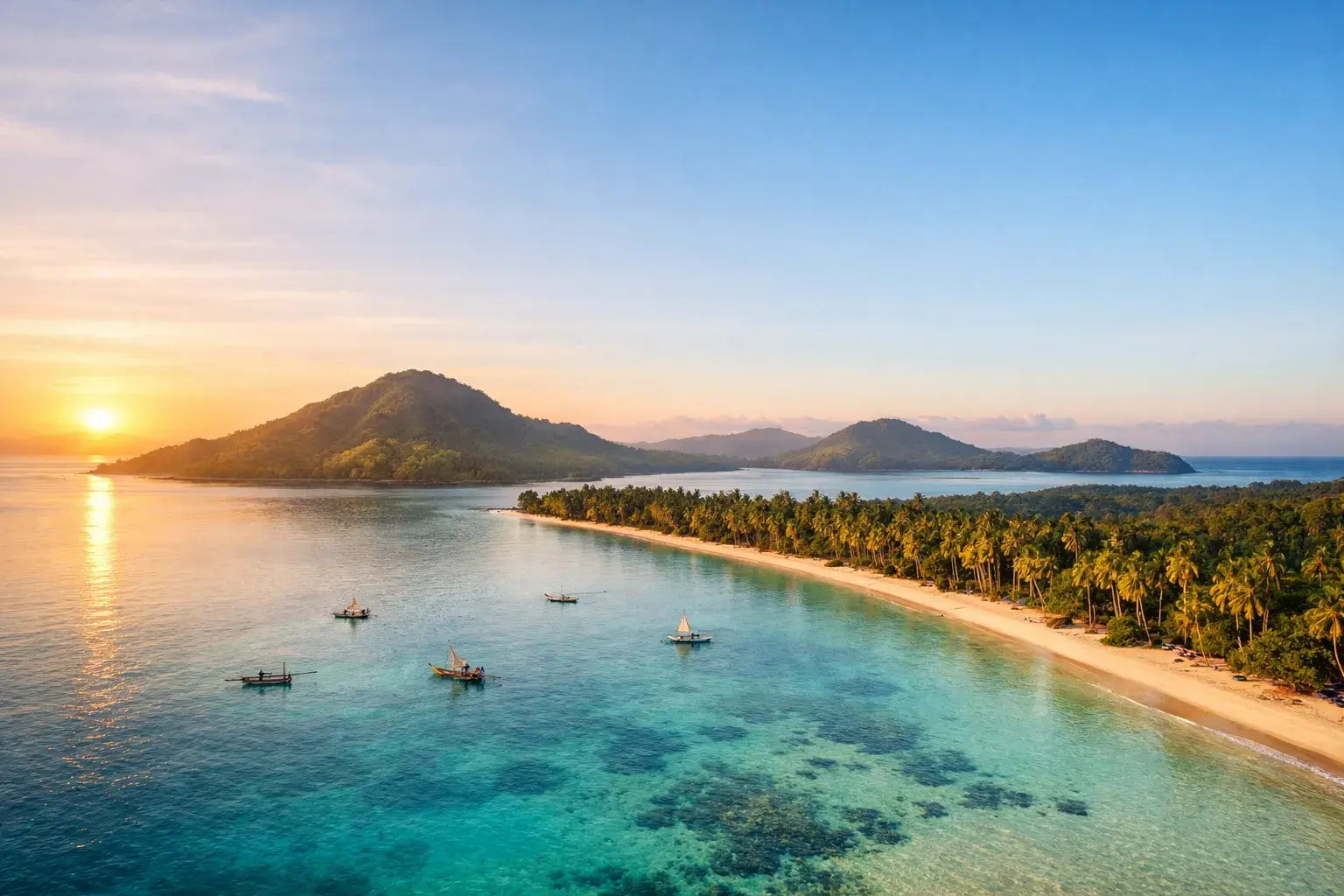
Nosy Be ("big island") holds a strategic position in the Mozambique Channel: natural shelters, easy access to Madagascar's northwest coast, and openness to Indian Ocean sea routes. Before tourism, the area lived through exchange (agriculture, fishing, coastal trade) and followed Sakalava dynamics linked with Comorian and wider Indian Ocean influences.
Merina pressure and the 19th-century shift
In the early 19th century, Merina expansion reshaped political balances along the coasts. In that context, Sakalava Queen Tsiomeko (Boina/Iboina) sought external support, mainly from France. Nosy Be became a strategic anchoring point, both politically (protection) and commercially (port and redistribution).
Colonial period: protectorates, port and Hell-Ville
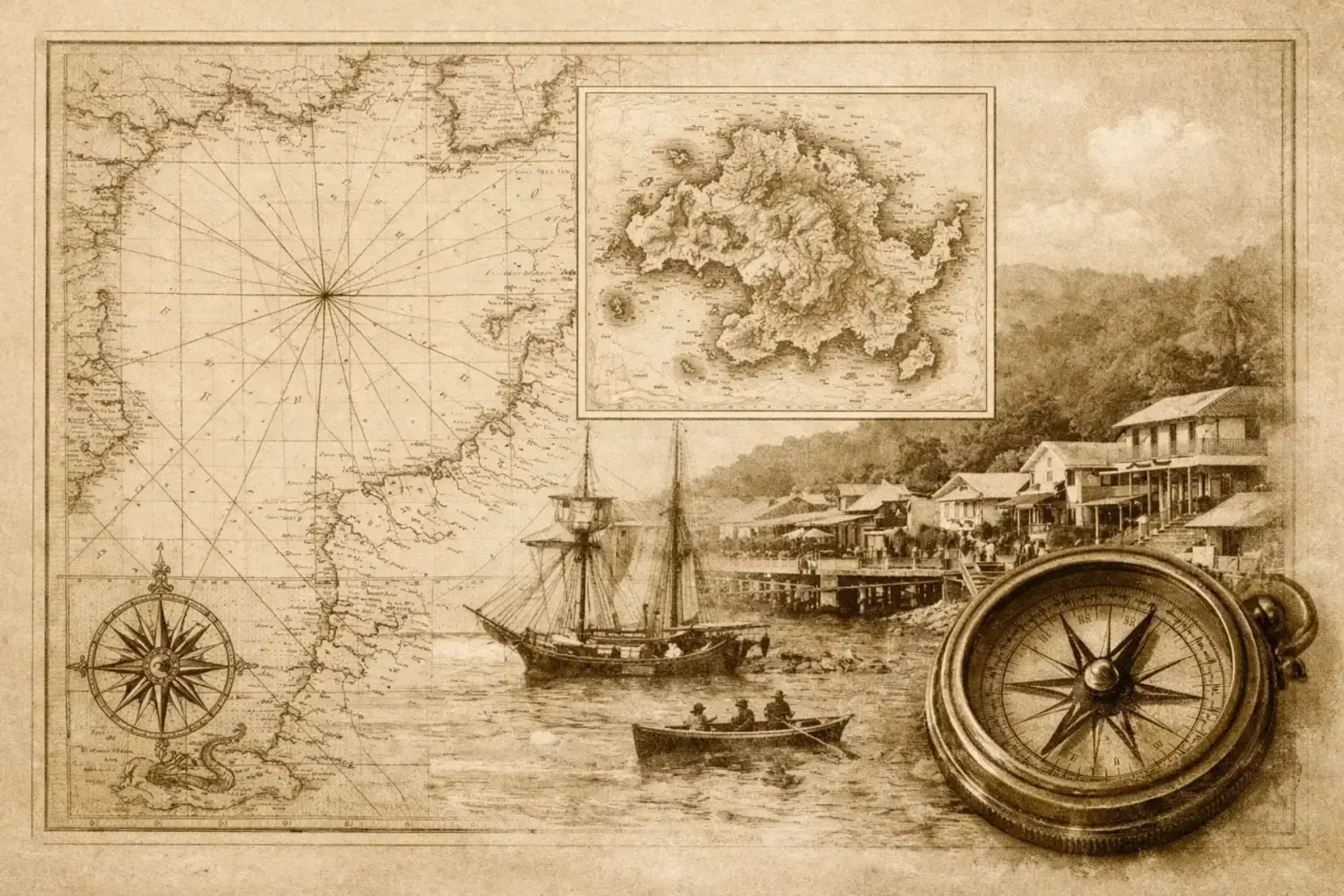
In 1841, Nosy Be entered French protection/administration through agreements with Sakalava sovereignty. The French setup then grew around Andoany, officially named, but widely known as Hell-Ville after Admiral Anne Chretien Louis de Hell. This period left a lasting city-port identity and a key trade-node role in Indian Ocean circulation.
Early colonial administrative actors
One of the French military navigators who arrived early in Nosy Be, Mompasso, took part in the first local administrative functions at the beginning of the colonial period.
Mid-19th century tensions
Tensions remained strong: abolition of slavery in the French empire and changing trade patterns created local resistance. Nosy Be alternated between political friction and economic dynamism while keeping its island singularity.
Today: a mixed island identity
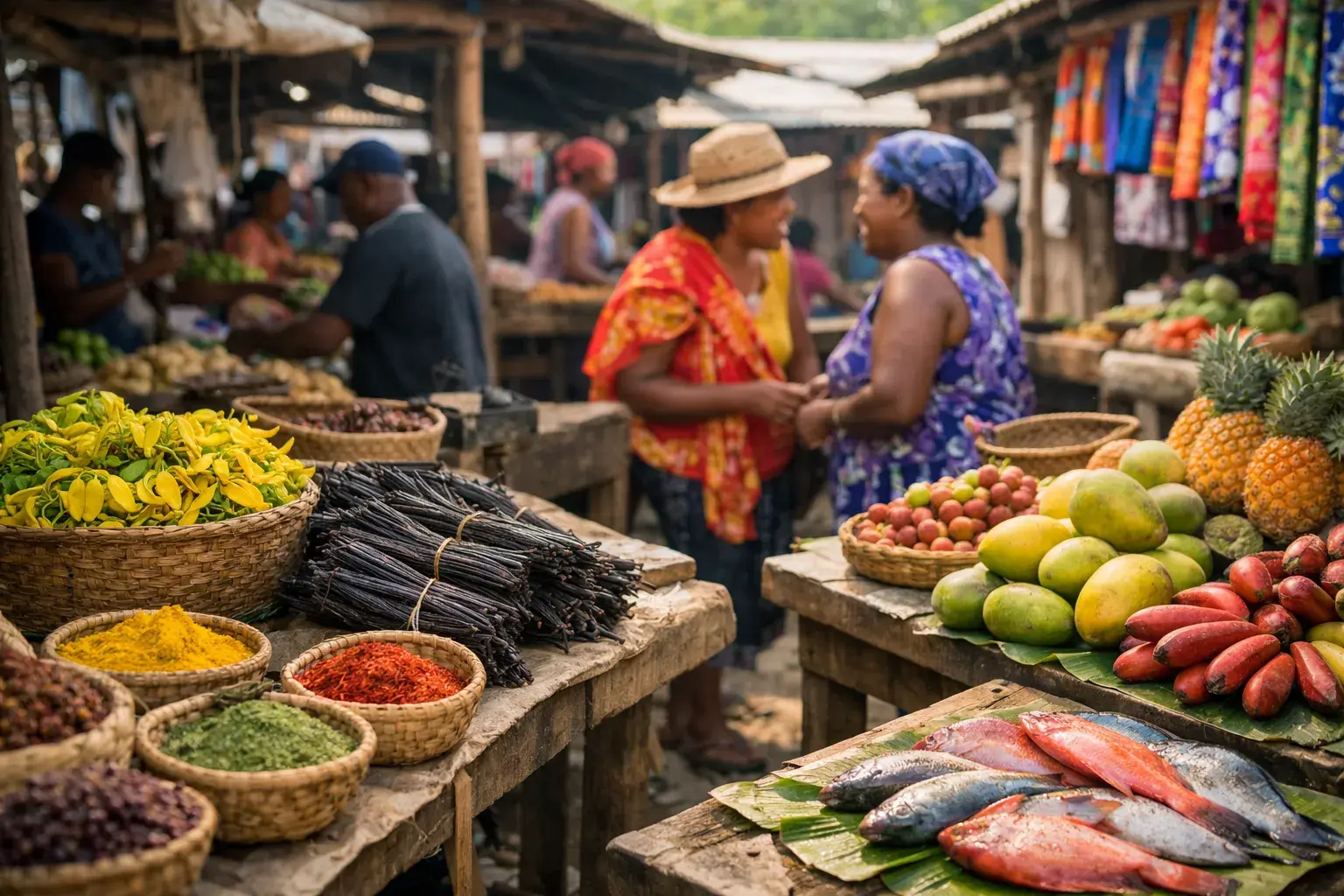
Nosy Be blends Sakalava, Comorian, Indian and European influences, visible in place names, historic districts, everyday habits, and a very local approach to time, relationships and hospitality.
Local culture
A Sakalava island with concrete social codes
Sakalava culture still structures many traditions: commitment to one's word, respect for elders, the importance of places (tombs, trees, rocks, lakes), and implicit rules that vary by village.
The "mora mora" rhythm
You often hear "mora mora": literally "slowly, gently". Here, patience and politeness beat pressure and urgency.
- Sakalava culture still shapes many traditions: spoken commitments, respect for elders, the importance of places (tombs, trees, rocks, lakes), and implicit rules that vary by village.
- The rhythm mora mora means "slowly, gently": move with patience and without forcing things.
- Say hello, smile, and ask before taking photos.
- If someone says "it is fady", change the plan calmly, as explained below.
Fady / taboos (to know before an excursion)
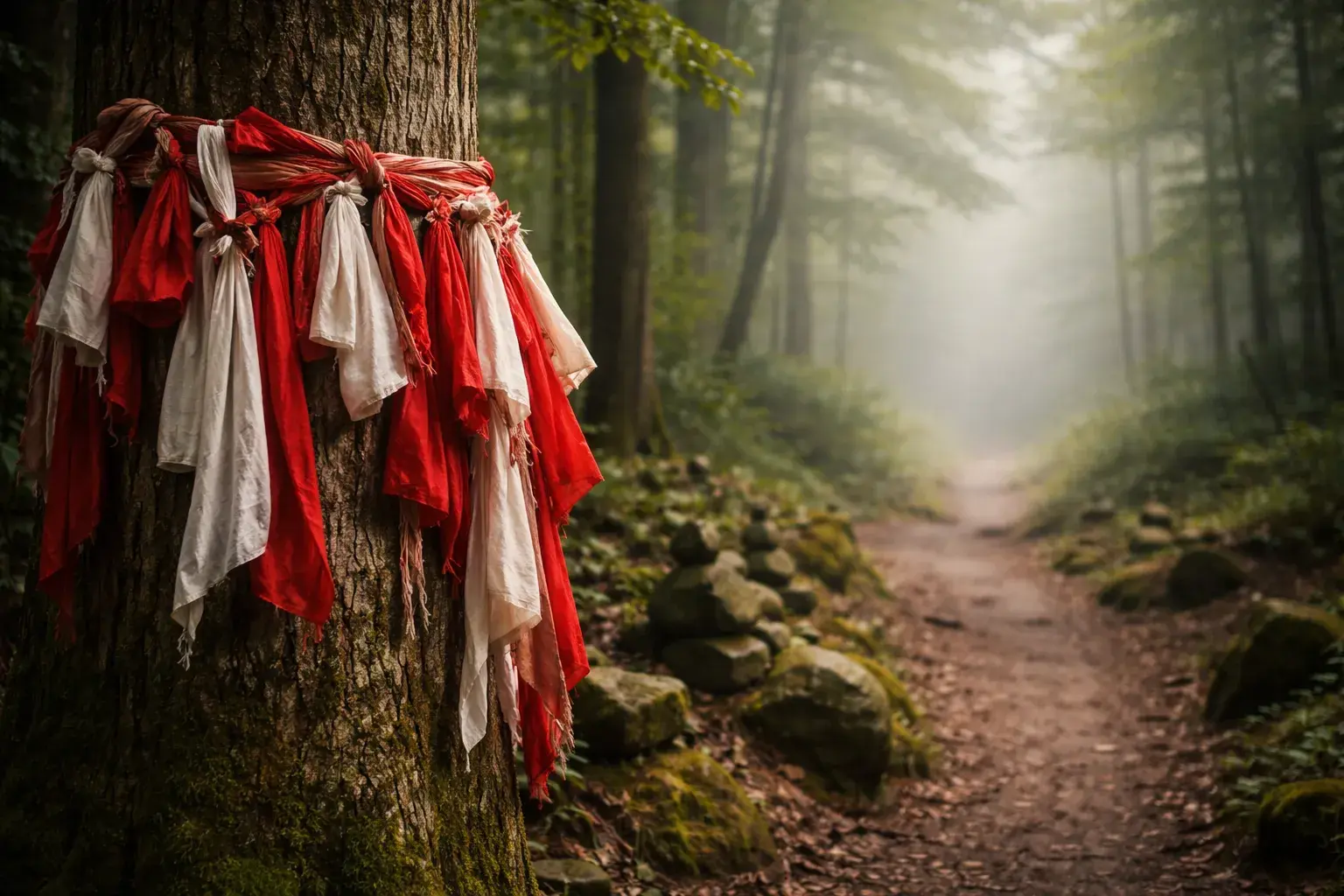
What is "fady"? It is a social and/or spiritual prohibition (ancestors, places, local narratives). It is not an administrative rule. It is often local to a community or family, usually non-negotiable, and often marked by red and white cloth around sacred areas.
Typical examples (Nosy Be and nearby)
- Some places are closed or governed by specific rules (dress, behavior, silence).
- On Nosy Sakatia, it is not words that are forbidden, but dogs: you are not allowed to bring dogs to the island.
- In some communities, specific days are forbidden for work or certain activities.
How to react
- Treat fady as a local rule.
- Ask: "What should we do instead?" and follow local guidance.
- Avoid mockery: respect is the fastest way to unlock situations.
Useful mini dictionary
In Nosy Be, "official" Malagasy (Merina highlands) is not always the daily spoken version. Here is a practical starter.
| Malagasy word | Meaning |
|---|---|
| Manao ahoana ? | Hello / hi |
| Misaotra | Thank you |
| Azafady | Please / sorry |
| Eny / Tsia | Yes / no |
| Ohatrinona ? | How much does it cost? |
| Tsy azoko | I do not understand |
| Rano | Water |
| Tsara | Good / OK |
See also: our tips and practical recommendations for Nosy Be.

Sources
- A Historical Timeline for Madagascar
- The Birth of a Node: Nosy Be as a French Protectorate and Trade Networks
- Diego Suarez et Nosy Be : histoire d'une rivalite
- Mora-Mora - Malagasy Way of Life
- The influence of cultural prohibitions on wildlife hunting
- Sahamalaza-Iles Radama - Protected Areas
- Nosy-Be : la culture, un levier de developpement