Nature guide · Nosy Be
Wildlife and plants of Nosy Be
When to come, where to look, and what you can realistically see.
Lokobe for forest, Tanihely for reef life and open water for cetaceans: each habitat has its own rhythm and useful windows.
Best all-round window
September–October
Generally drier Lokobe trails, resident turtles at Tanihely, humpbacks still present and the beginning of whale shark season.
Wildlife observations depend on weather, sea conditions, tides and animal activity.
12 months, eight markers
Nosy Be wildlife calendar
This calendar distinguishes year-round presence from seasonal encounters. It does not measure exact abundance or the day’s weather.
Ginot also offers a late-afternoon and evening excursion to Lokobe: departure at 3:30 pm, return around 8–9 pm, €100 per person.
Swipe horizontally to see all 12 months →
| Wildlife & plants | Jan | Feb | Mar | Apr | May | Jun | Jul | Aug | Sep | Oct | Nov | Dec |
|---|---|---|---|---|---|---|---|---|---|---|---|---|
| Black lemurs & Lokobe forestLokobe National ParkBlack lemurs: active by day and nightPresent year-round | ||||||||||||
| Brookesia, geckos & amphibiansLokobe humid understoreyDay or night, depending on the speciesPresent year-round, with variable visibility | ||||||||||||
| Sea turtles & coral reefNosy Tanihely National ParkDaytime observationTurtles are present year-round | ||||||||||||
| Coastal & offshore dolphinsNosy Be coasts and open waterDaytime observationEncounters possible year-round | ||||||||||||
| Humpback whalesOffshore Nosy BeDaytime observationJuly–October; late passages in November | ||||||||||||
| Whale sharksCoastal waters, outside parksDaytime observationCore season: October–November | ||||||||||||
| Omura’s whale & rare cetaceansOuter shelf towards Nosy Iranja and AmpasindavaDaytime observationResident Omura’s whales; opportunistic encounters | ||||||||||||
| Ylang-ylang flowersPlantations, outside parksYear-round flowering, with variable abundance |
Understand the eight calendar markers
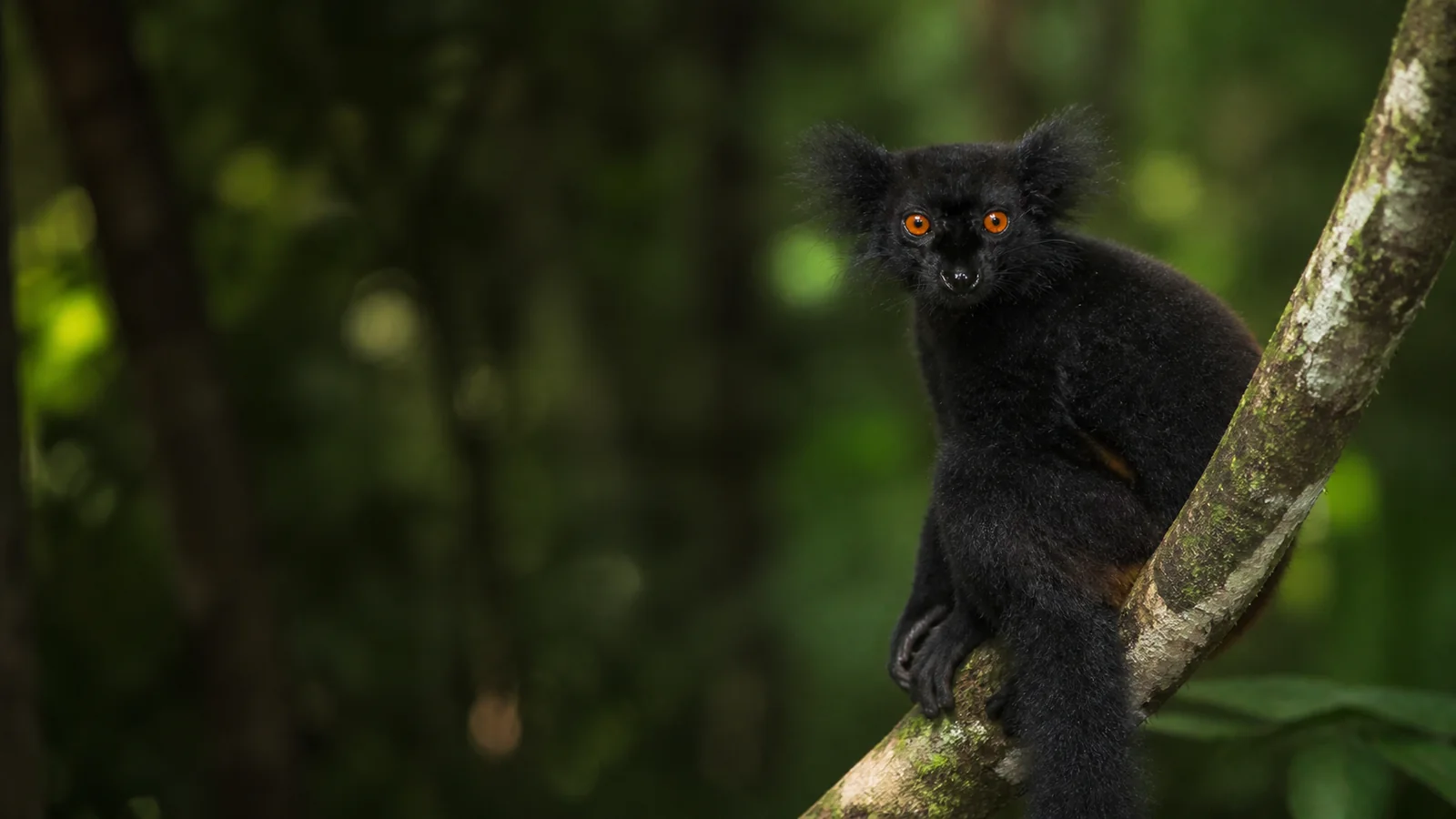
Black lemurs & Lokobe forest : Black lemurs are present year-round. Rain affects walking conditions, not their presence; sightings still vary. Black lemurs can be active both day and night. Mouse lemurs and sportive lemurs are nocturnal.
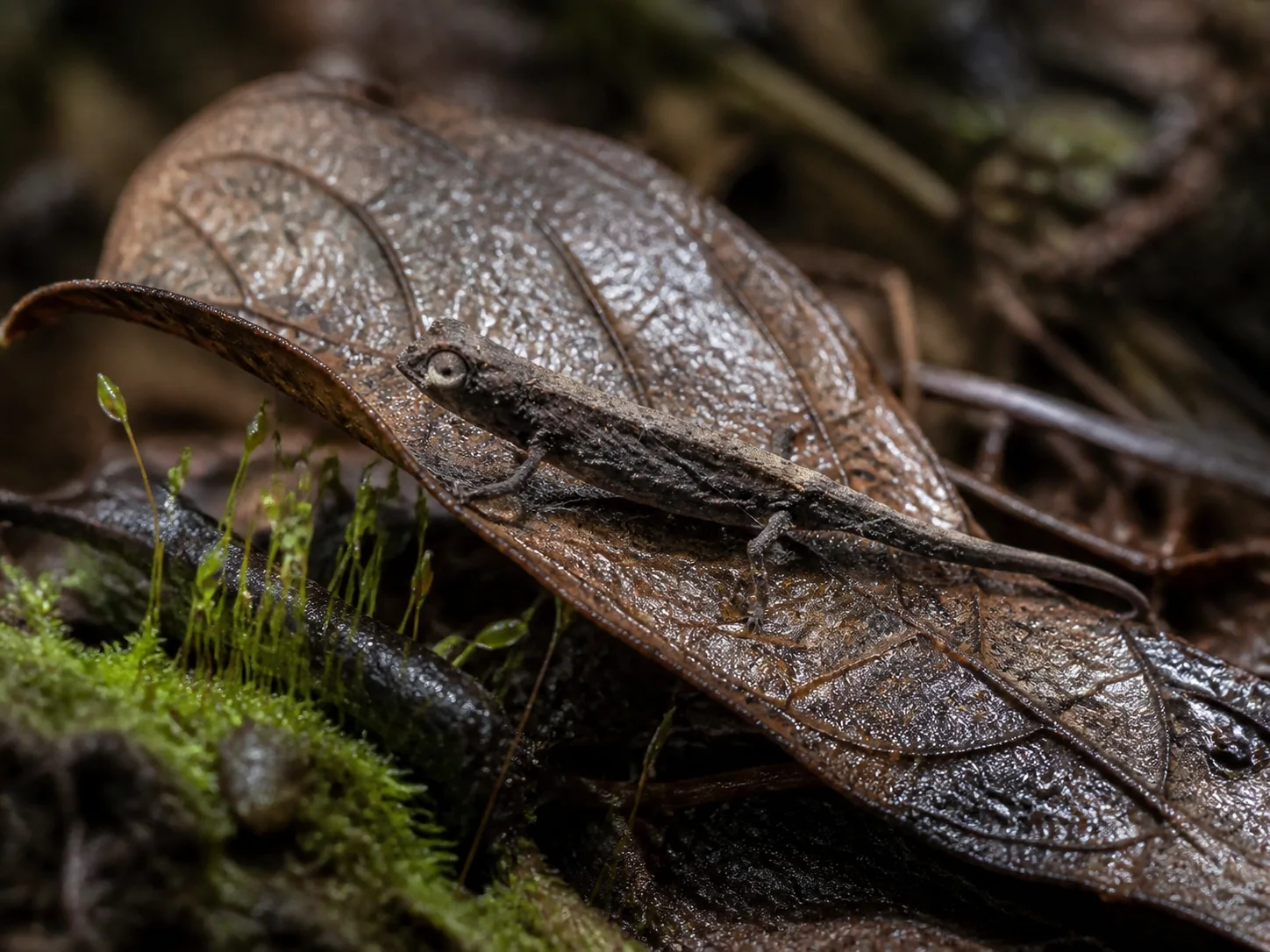
Brookesia, geckos & amphibians : These animals are present year-round. Activity and visibility depend on species, humidity and temperature; no shared monthly peak has been established for this group in Lokobe. Brookesia chameleons are active by day and sleep on perches at night. Leaf-tailed geckos such as Uroplatus henkeli are nocturnal, whereas Phelsuma day geckos are active by day. Amphibian activity patterns vary by species.
Sea turtles & coral reef : Sea state, tides and visibility affect sightings, not whether turtles are present. Nesting and hatching follow separate patterns, depending on species, beaches and nests.
Coastal & offshore dolphins : Encounters depend on species and the waters explored. No sufficiently documented shared monthly peak supports a short season for all dolphins.
Humpback whales : The usual season runs from July to October. Late passages remain possible in November; timing varies between years and sightings are not guaranteed.
Whale sharks : Surface sightings are concentrated from mid-September to mid-December, especially in October–November. Outside this window, the calendar does not imply biological absence from the region.
Omura’s whale & rare cetaceans : Omura’s whales are resident in the region year-round, but encounters remain opportunistic. Other rare cetaceans do not share one season.
Ylang-ylang flowers : Flowering continues year-round, with abundance varying between plantations and conditions. Harvesting takes place early in the morning; visits depend on the local schedule.
Choose the right habitat
Which park is best for wildlife viewing?
Choose by habitat: Lokobe for forest, Tanihely for reef life, open water for cetaceans, and plantations for ylang-ylang.
National park · Forest
Lokobe
- Best for
- Black lemurs, mouse lemurs, Brookesia, leaf-tailed geckos, forest birds and Dypsis palms.
- When
- Wildlife is present year-round. Rain affects trail conditions; activity and visibility vary between species.
- Field note
- Start early and take a park guide. The Kindro circuit notably focuses on endemic palms and small wildlife.
862 ha, including 740 terrestrial hectares; 192 plant species recorded by Madagascar National Parks.
National park · Reef
Nosy Tanihely
- Best for
- Green and hawksbill turtles, reef fish, corals, invertebrates and accessible snorkelling.
- When
- Turtles and the reef can be observed year-round. The choice of day and time depends on sea state, tides and visibility.
- Field note
- Match the outing to tide and sea state, stay horizontal above the reef and never pursue a turtle.
154 fish species, 110 coral species and two marine turtle species have been recorded.
Open ocean · Outside parks
Western Nosy Be waters
- Best for
- Humpbacks, whale sharks and dolphins; other large cetaceans remain rare encounters.
- When
- Humpbacks: July–October, with late passages possible in November. Whale sharks: mainly mid-September to mid-December. Dolphins have no shared short season.
- Field note
- Use an operator trained in approach codes. A large share of documented whale shark habitat lies outside protected areas.
Seven dolphin species are identified in the seascape and at least 21 cetacean species are documented across the wider region.
Cultivated landscape · Outside parks
Ylang-ylang plantations
- Best for
- Mature flowers, low-pruned trees, early harvest work and traditional distillation.
- When
- Flowering continues year-round, with abundance varying between plantations and conditions. Harvest takes place early in the morning.
- Field note
- Do not confuse this emblematic crop with Lokobe’s endemic flora. They tell two different stories of the island.
Cananga odorata is a cultivated Southeast Asian species that became a historic marker of Nosy Be’s landscape.
Read the habitats
Four distinct habitats
Small wildlife in Lokobe’s forest
Sambirano forest
Small wildlife in Lokobe’s forest
Lokobe protects a remnant of humid lowland forest. The search is as much for black lemurs as for tiny Brookesia chameleons, Uroplatus geckos, frogs and mouse lemurs. Rain makes walking harder but activates part of this discreet community.
- Move slowly, early in the day, with a guide who can read the understorey.
- Dypsis palms, Diospyros ebony trees and humid-forest canopy species.
- No feeding: the point is wild behaviour, not a staged photograph.
Sea turtles at Tanihely
Fringing reef
Sea turtles at Tanihely
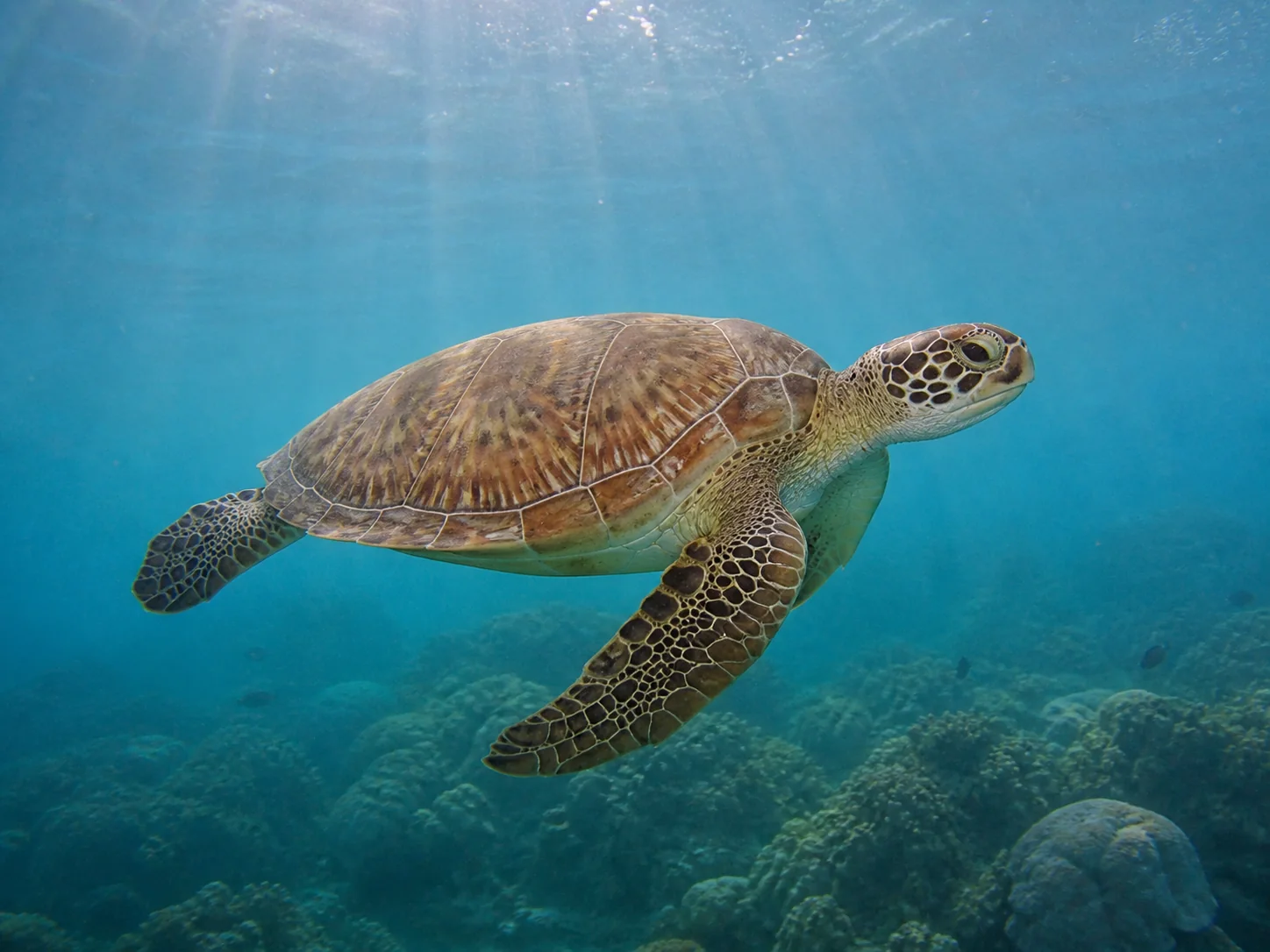
Tanihely brings reef fish and turtles together in a protected area close to Nosy Be. A turtle surfacing to breathe must keep its path. A good encounter is one that did not force the animal to change its behaviour.
- Both green and hawksbill turtles are recorded in the park.
- Mask, snorkel, sound buoyancy and reef-conscious sunscreen.
- Never touch coral, collect shells or block a turtle’s route.
Whales, whale sharks and dolphins
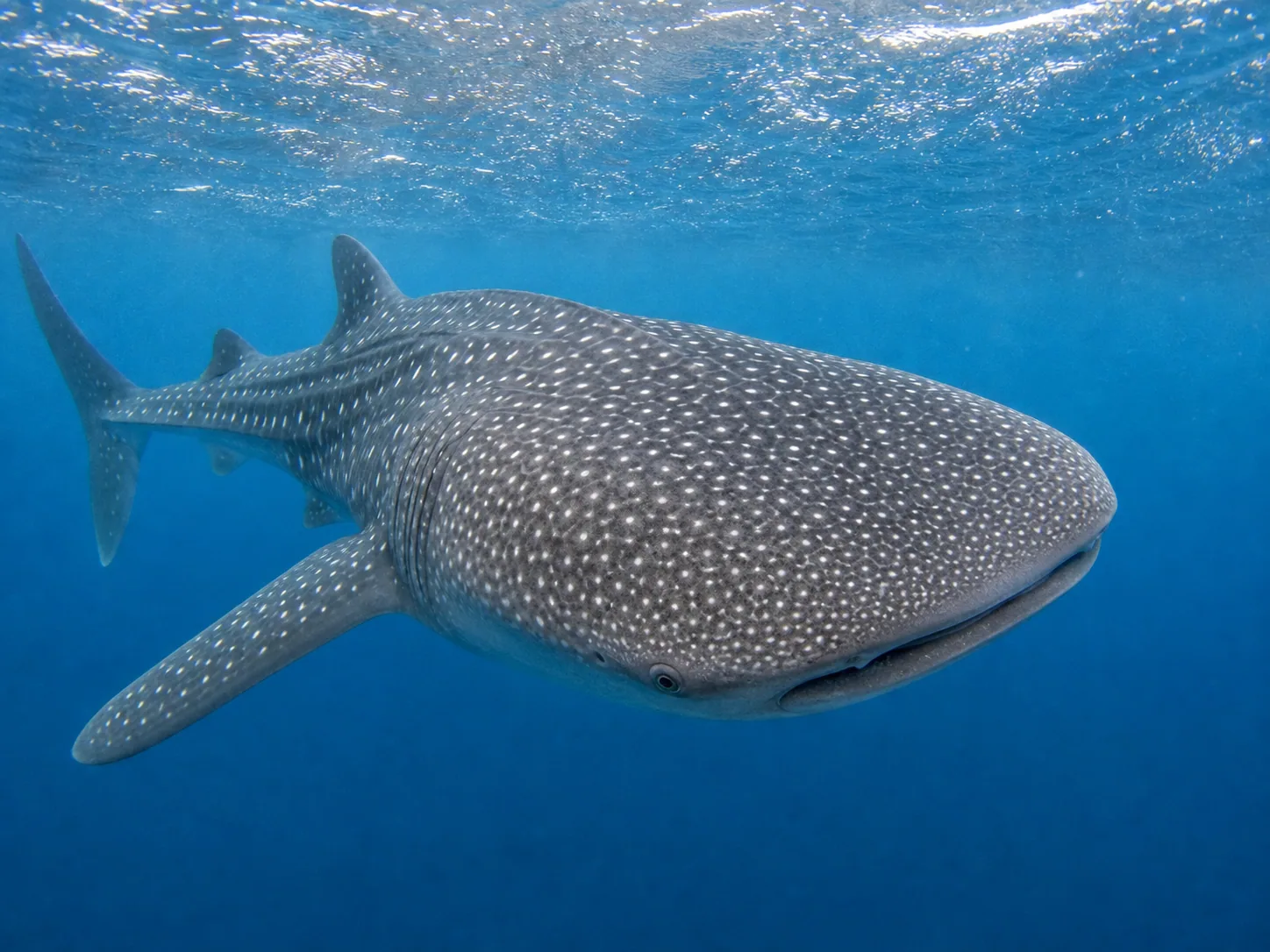
Marine megafauna
Whales, whale sharks and dolphins
Humpback whales and whale sharks provide the two clearest seasonal windows. Nosy Be also supports coastal Indian Ocean humpback and Indo-Pacific bottlenose dolphins, with spinner and pantropical spotted dolphins offshore. Omura’s whales are resident in the northwest year-round, but encounters remain opportunistic.
- Humpbacks: July–October, occasionally November; whale sharks: mainly mid-September to mid-December.
- Seven dolphin species are recorded in the Nosy Be seascape.
- Omura’s and Bryde’s whales, blue whales, sperm whales and beaked whales are documented but cannot be planned.
- Prefer a trained guide and the approach distances set by Cétamada charters.
Endemic palms on one side, ylang-ylang on the other
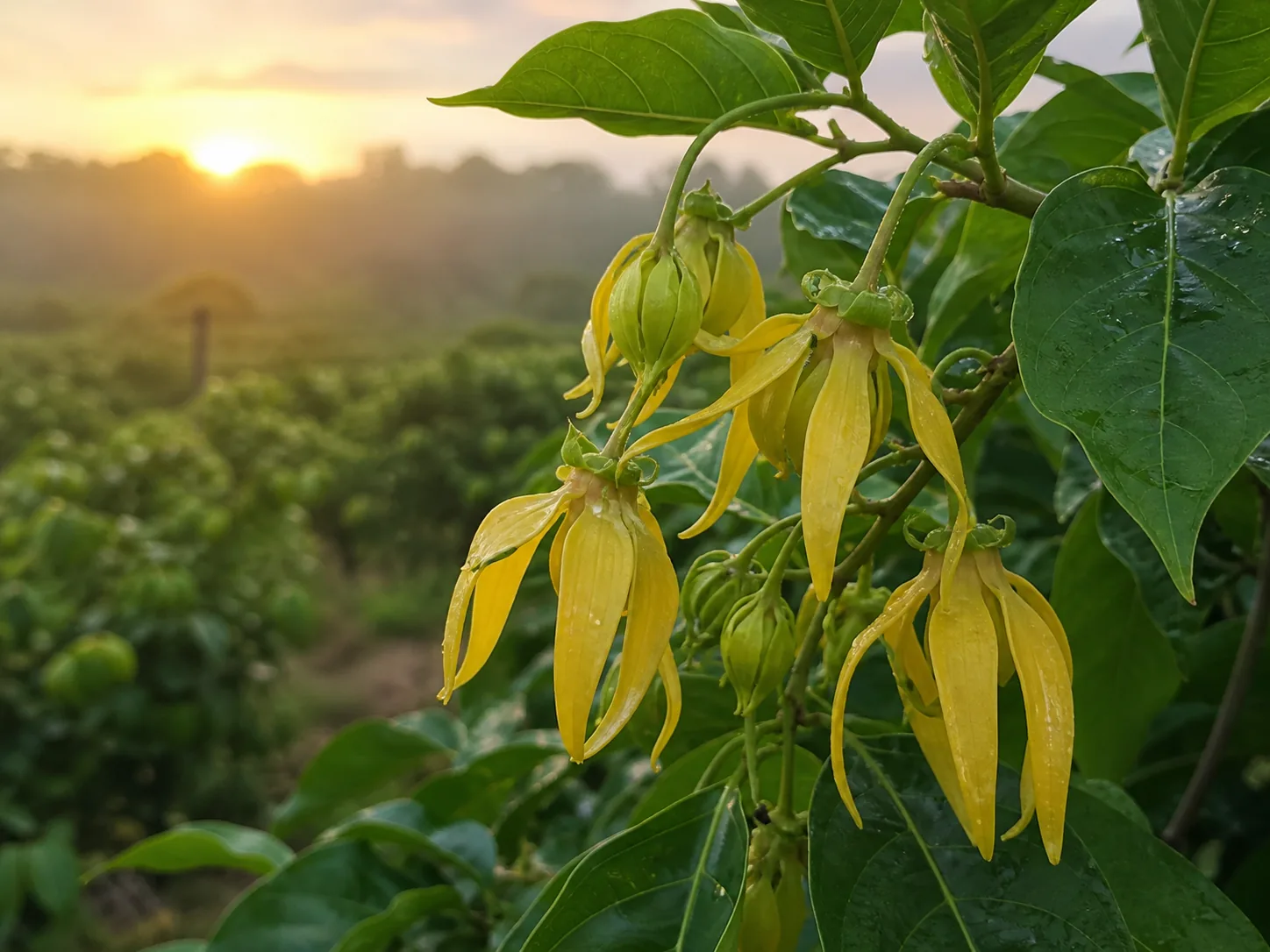
Wild & cultivated plants
Endemic palms on one side, ylang-ylang on the other
Nosy Be’s wild botanical signature is found in Lokobe: endemic palms, ebony trees and humid-forest species. Ylang-ylang is an introduced crop shaped by people. It can flower year-round; mature blossoms are picked early to preserve their aromatic oils.
- Lokobe’s Kindro circuit was designed around palm observation.
- Visit ylang-ylang in plantations or distilleries, not in a park.
- Ylang-ylang flowers year-round; harvesting depends on local flowering and takes place early in the morning.
Build your stay
What should you prioritise for your dates?
The best season is different for a herpetology enthusiast, a keen walker and someone travelling for marine megafauna.
Active forest, demanding weather
Humidity and temperature influence understorey activity, with different responses between species. Trails can be slippery and sea outings disrupted.
Best for : Understorey wildlife, reptiles, amphibians and lush vegetation.
A green island in a gentler transition
Rainfall generally eases and the forest remains dense. Turtles, lemurs and ylang-ylang flowers are present year-round; daily conditions guide outings.
Best for : Plants, ylang-ylang, turtles and early long nature itineraries.
Humpbacks and drier trails
This is the heart of the austral winter: humpback whales use the region while terrestrial conditions are generally more comfortable.
Best for : Humpback whales, Lokobe, snorkelling and hiking.
The strongest overlap
Humpback season overlaps with the start of whale shark encounters. Forest and reef outings depend on daily conditions.
Best for : A complete forest, reef and marine-megafauna trip.
Whale sharks and returning rain
The core whale shark season continues in November, then sightings generally decline around mid-December. Late humpback passages are still possible in November.
Best for : Whale sharks, reptiles, amphibians and humid-forest photography.
Responsible observation
Watch without disturbing
In Nosy Be, Give wildlife space and follow park and marine approach rules.
Keep your distance
Do not touch, feed, surround or chase. If the animal moves away, the encounter is over.
Stay on the route
Follow park paths and instructions in Lokobe. In the water, never stand or rest on coral.
Choose trained operators
For whales, dolphins, whale sharks and turtles, ask for Cétamada approach charters to be applied.
Accept a plan B
Trips may be rescheduled when sea or weather conditions are unsafe.
Quick answers
Before choosing your park
If I can visit only one park, which one should it be?
Lokobe for terrestrial wildlife and plants; Nosy Tanihely for turtles, fish and coral. Neither is a substitute for the other.
What is the best month to combine everything?
September–October offers an overlap between humpback and whale shark seasons. For whale sharks, October–November is the best-documented period.
Is Nosy Komba the best park for lemurs?
Nosy Komba is not a national park. To look for lemurs in forest habitat and experience broader biodiversity, Lokobe is the reference choice.
Can turtles be seen year-round?
Yes. Tanihely is accessible throughout the year and turtles are resident, although visibility and safety depend on that day’s sea, tide and weather.
Which other cetaceans can genuinely be encountered?
Indian Ocean humpback and Indo-Pacific bottlenose dolphins occur near shore, with spinner or pantropical spotted dolphins offshore. Omura’s and Bryde’s whales, blue whales, sperm whales and beaked whales are documented, but they are too rarely encountered to plan a trip around.
Evidence base
Sources and method
Calendar revised on 2 September 2026 using primary and official sources. It distinguishes year-round presence, encounter seasons and opportunistic sightings; weather, visibility, nesting and hatching are considered separately.
View the 29 documentary sources
- Madagascar National Parks — Lokobe ↗Official overview of Lokobe wildlife, without a monthly abundance or visibility calendar.
- Madagascar National Parks — Nosy Tanihely ↗Official overview of the park and its green and hawksbill turtles, without monthly sighting-frequency measurements.
- Diamant et al. — Aquatic Conservation ↗Whale shark monitoring during September–December in 2015–2019, documenting surface encounters without proving absence outside that season.
- Fabietti et al. — Biology ↗Humpback whale observations around Nosy Be during the breeding season.
- WCS — Nosy Be seascape ↗Northwest Madagascar’s role for cetaceans, turtles, seabirds and reefs.
- WCS — Nosy Be seascape factsheet ↗Seven identified dolphin species and documented large-cetacean diversity.
- Caputo et al. — Marine Mammal Science ↗Indian Ocean humpback and Indo-Pacific bottlenose dolphins around Nosy Be.
- Cerchio et al. — Marine Mammal Commission ↗Field report on northwestern cetaceans explaining sampling limitations when interpreting dolphin seasonality.
- Cerchio et al. — Royal Society Open Science ↗Initial study of Omura’s whale ecology in the northwest, still cautious about year-round residency later documented by further monitoring.
- Marine Mammal Protected Areas Task Force ↗Regional synthesis documenting year-round residency of Omura’s whales and late-season humpback presence, without guaranteeing sightings.
- Cétamada — Ecotourism ↗Approach charters and the framework for marine megafauna viewing.
- Journal of Natural History — amphibian activity ↗Higher rainforest amphibian activity during Madagascar’s warm, rainy season.
- Ylang-Ylang Nosy Be — production ↗First-hand account by a Nosy Be producer of variable year-round flowering and early-morning harvesting.
- Wikimedia Commons — male black lemur in Lokobe ↗Photographic reference used for Eulemur macaco morphology.
- Wikimedia Commons — Brookesia minima in Lokobe ↗Photographic reference used for the minute chameleon’s silhouette, scale and texture.
- Wikimedia Commons — Chelonia mydas ↗CC0 photograph used as the green turtle’s anatomical reference.
- Wikimedia Commons — whale shark anatomy ↗Public-domain zoological plate used to lock Rhincodon typus’s complete silhouette.
- NOAA / Wikimedia Commons — whale shark at the surface ↗Photograph used for body volume, dorsal ridges and natural skin appearance.
- Andrews & Birkinshaw — Folia Primatologica (1998) ↗Field study in Lokobe documenting daytime and night-time activity in black lemurs.
- Duke Lemur Center — Things That Go “BOING” in the Night ↗Nocturnal activity of mouse lemurs and sportive lemurs.
- Glaw et al. — PLOS ONE (2012) ↗Brookesia: ground-level foraging and sleeping on perches at night.
- Oregon Zoo — Uroplatus henkeli ↗Nocturnal activity of the leaf-tailed gecko Uroplatus henkeli.
- Muséum national d’Histoire naturelle — Phelsuma ↗Diurnal activity of Phelsuma day geckos.
- Heinermann et al. (2015) — Year-round activity patterns in a hyperdiverse community of rainforest amphibians in Madagascar ↗Year-round study of amphibians at Analamazaotra, not a monthly survey of Lokobe or a shared reptile calendar.
- Boyd et al. (2021) — Evidence for Host Selectivity and Specialization by Epizoic Chelonibia Barnacles Between Hawksbill and Green Sea Turtles ↗Study of turtle-associated barnacles that also documents turtle habitats at Sakatia, Tanihely and Komba, without standardized monthly monitoring.
- Sakatia Lodge — Explore: green turtles in the protected seagrass meadow ↗A local operator’s first-hand account of green turtles present year-round in Sakatia’s protected seagrass meadow.
- Bourjea, Ciccione & Ratsimbazafy (2006) — Marine turtle nesting at Nosy Iranja, Madagascar ↗Monitoring of nesting at Iranja from 2000 to 2004, distinguishing species and their seasons rather than defining a universal hatching calendar.
- Fabietti et al. (2024) — Surface behaviours of humpback whales off Nosy Be, Madagascar ↗Study of humpback whale behaviour off Nosy Be based on outings from July to October 2018.
- Landema — Ylang-ylang bio : une huile essentielle de qualité ↗Supply-chain overview describing year-round flowering with greater abundance after rain, without a universal monthly optimum.
Your dates change the plan
Build a coherent nature day
Share your dates, what you genuinely want to see, and your comfort level in the water or on a trail. Ginot can suggest the right site, timing and a realistic plan B.